
Four Figures to Stay Within for Safe Towing
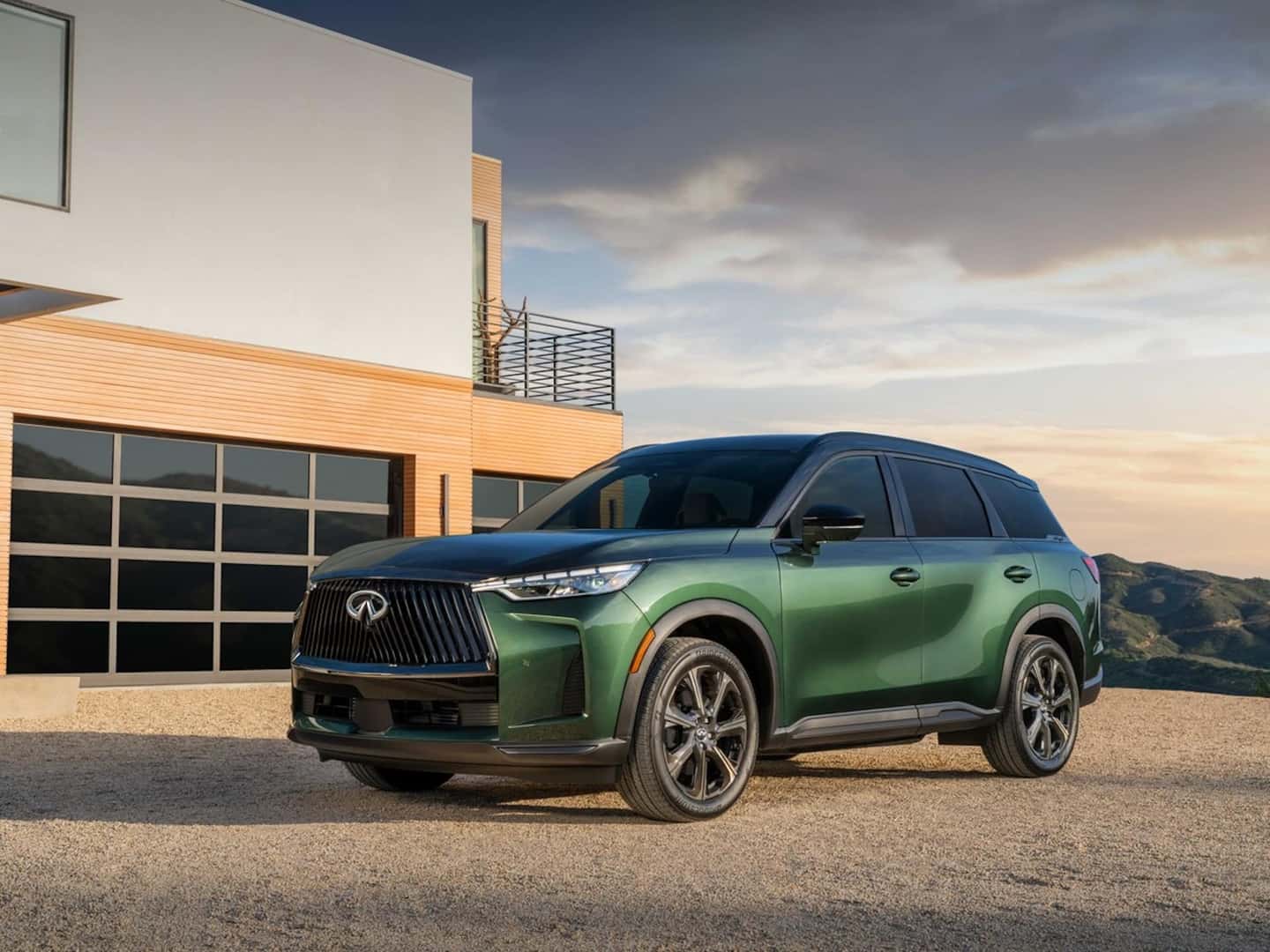
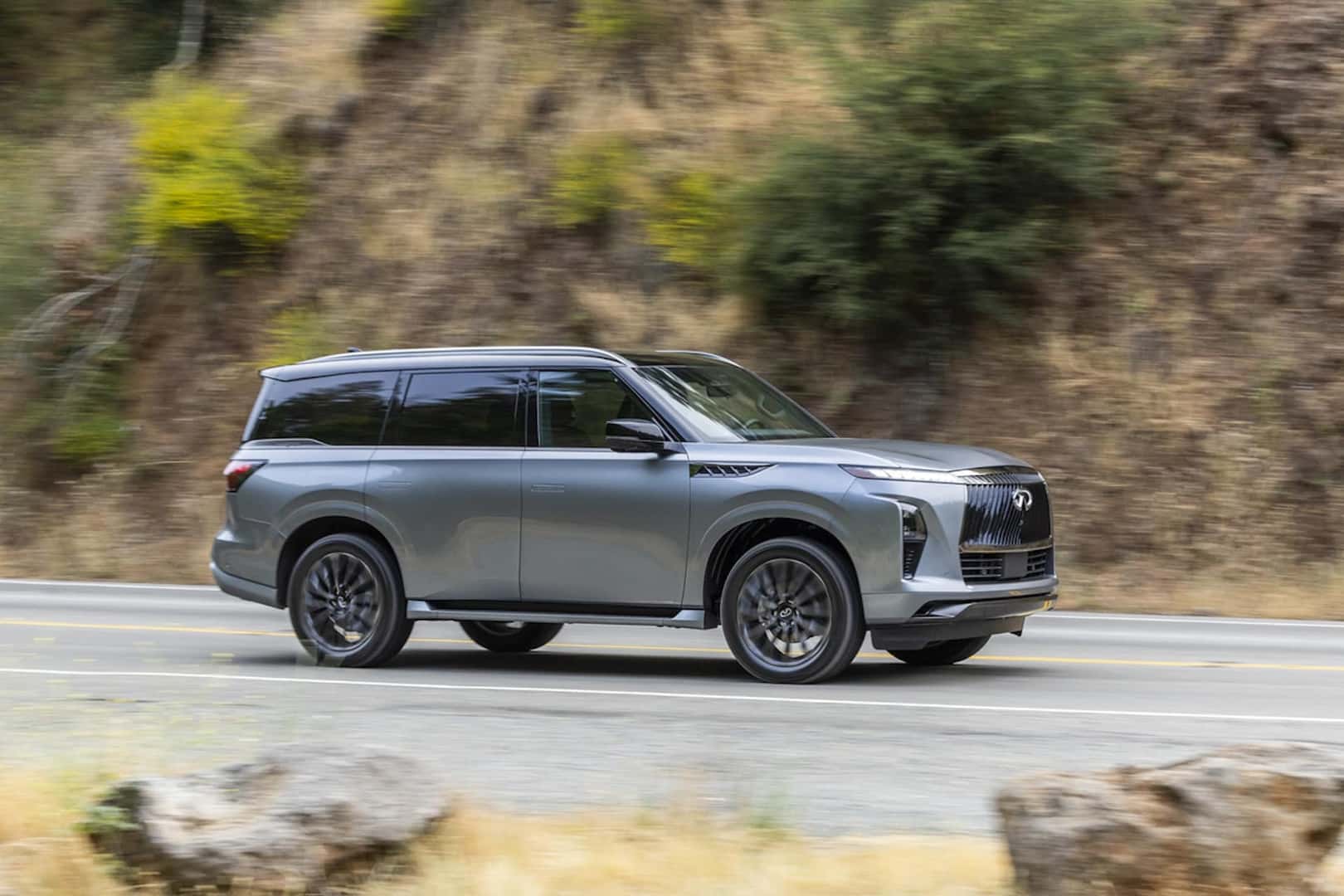
Both the redesigned 2026 QX60 and recently redesigned QX80 SUVs are built to offer impressive towing capacities for their classes, at 6,000 pounds and 8,500 pounds, respectively. This creates opportunities for various enjoyable activities like boating, comfortable camping, and different types of recreational motorized pursuits. While maximum towing capacity is important, it’s not the only factor to consider for safe towing. Dick Smith INFINITI explains more in this post.
Trailer Weight and Maximum Towing Capacity
The first two figures you need to know before towing anything are the proposed trailer’s weight and your vehicle’s towing capacity. We mentioned the general figures for the QX60 and QX80 models above. The trailer weight should be clearly indicated on the trailer. You need to know both the trailer weight and the cargo weight, and ensure it stays within the trailer’s specified payload capacity. However, making sure your trailer fits within your towing vehicle’s capacity is just the first step.
Tongue Weight
Tongue weight measures the downward force applied to your trailer hitch ball. The common guideline is that the tongue weight should be roughly 10 to 15% of the trailer’s total weight. When loading a trailer, it’s important to pay attention to how you distribute the cargo. For example, when hauling a vehicle on a trailer, the tongue weight will depend on where the vehicle is positioned. If you’re just placing random cargo in or on the trailer, the tongue weight will be affected by the placement of the heaviest items, especially if they are significantly heavier than the other cargo.
It is important to stay within that 10 to 15% range as an exceptionally light tongue weight can also be problematic. This indicates that too much of your trailer’s weight is behind the axle(s), resulting in an unstable, rear-heavy trailer. Generally, 60% of a trailer’s weight should be in front of the axle.
The tongue weight also becomes part of another important figure to consider: your vehicle’s payload capacity. For instance, if your 8,000-pound trailer has 10% tongue weight, that 800 pounds is now part of the vehicle’s payload. If your vehicle has a maximum payload of 1,500 pounds, subtracting 800 pounds now leaves 700 pounds left to load in your vehicle, including you and all your passengers. If you exceed this amount, your vehicle could become overly stressed and possibly ride too low, especially in the rear. The more weight pressed down on the rear means less on the front wheels, which can compromise stability.
Gross Combined Weight Rating
If you encounter payload limitations, a common instinct is to shift cargo onto the trailer itself, but this also has its limits. Clearly, increasing weight on the trailer brings it closer to the maximum towing capacity, and loading cargo also impacts another important limit called the Gross Combined Weight Rating (GCWR). This rating indicates the maximum safe weight of the full load: tow vehicle, trailer, and all passengers and cargo combined. It’s best to maintain a safe margin below the maximum towing capacity, as it’s unlikely you’ll be towing without any cargo or passengers.
It can be challenging to know the combined weight of all cargo placed both on the trailer and in the vehicle. The first time you tow a specific trailer with your vehicle, it’s wise to have it weighed on a public vehicle scale. Entering “Public Scale” on a Google Map of the Columbia area will show you several public scales from which to choose. After weighing your fully loaded tow vehicle and trailer, you should be able to estimate your weights for future trips with the same combination.
Keeping your weights comfortably within your vehicle and trailer’s limits can greatly improve your ability to tow safely and confidently with your INFINITI SUV. Contact Dick Smith INFINITI for specific information on the capabilities of any of the new INFINITI models.

0 comment(s) so far on Four Figures to Stay Within for Safe Towing